
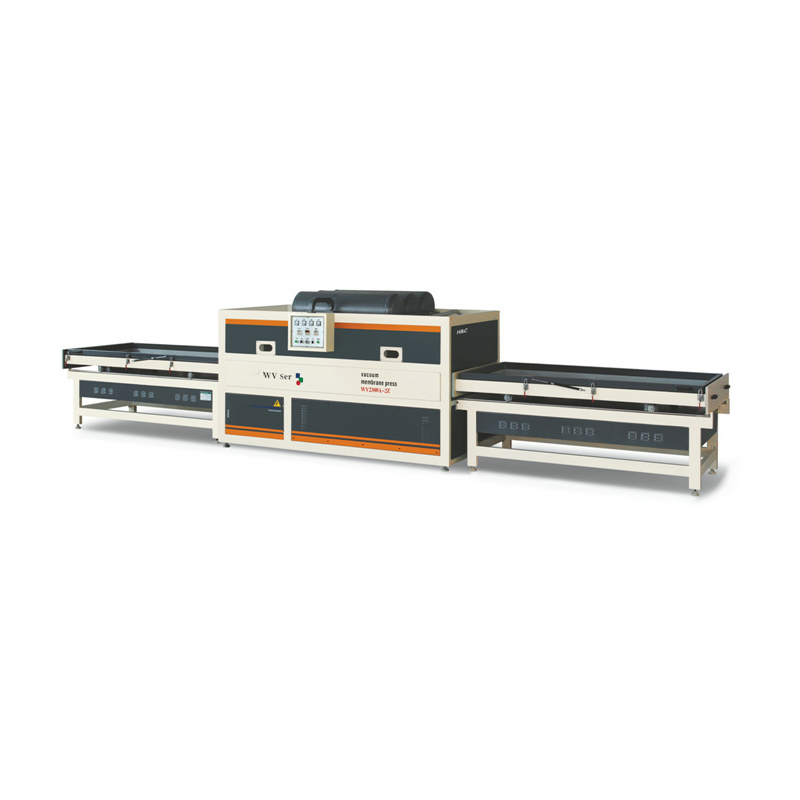
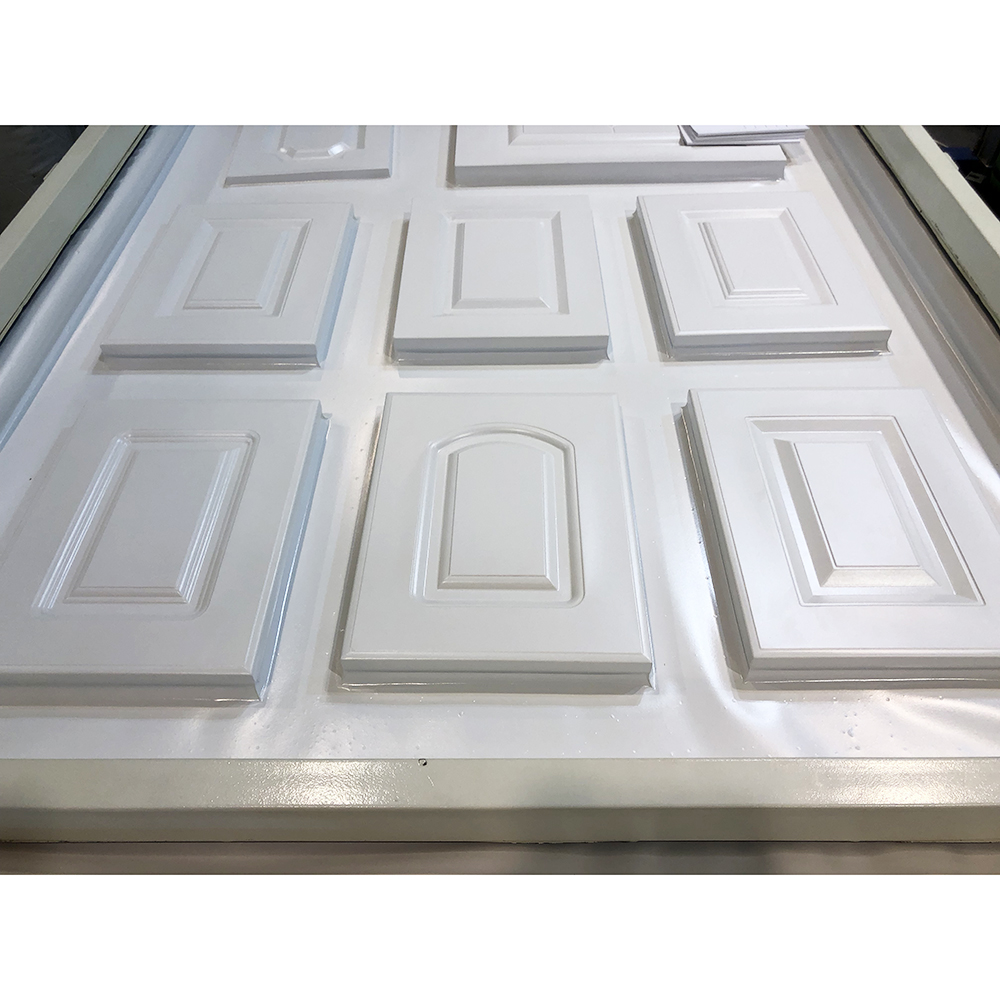
Vacuum Membrane Press Machine
Vacuum membrane press machine Can paste PVC on furniture, cabinets, speakers, crafts door, decorative door board furniture, and after adding silicon sheet for thermal transfer film and single wood veneer of the covered work.
Description
Vacuum membrane press machine Can paste PVC on furniture, cabinets, speakers, crafts door, decorative door board furniture, and after adding silicon sheet for thermal transfer film and single wood veneer of the covered work.
| Model | WV2300A-2 |
| Overall dimensions | 7900*1800*1800mm |
| Worktable size | 2300*1100mm |
| Max Work piece size | 2150*1000mm |
| Total power | 25Kw |
| Vacuum | -0.1Mpa |
| Weight | 1600kg |
Here are some common questions and answers about the Vacuum Membrane Press Machine:
1. What is a Vacuum Membrane Press Machine?
Answer: A Vacuum Membrane Press Machine is a device that uses vacuum suction to press a heat-sensitive film onto the surface of a substrate, such as wood or plastic. The machine evenly applies heat and pressure to the film, ensuring it adheres smoothly to the material.
2. What are the main applications of a Vacuum Membrane Press Machine?
Answer: Vacuum Membrane Press Machines are mainly used in the woodworking industry, furniture manufacturing, automotive interiors, and construction materials. They are used to laminate decorative films, wood veneers, or plastic films onto substrates like MDF, plywood, and other materials.
3. How does a Vacuum Membrane Press Machine work?
Answer: The machine works by heating a plastic film to a soft, flexible state, then placing it over the substrate. The vacuum system creates negative pressure, which pulls the film tightly against the material’s surface. The heat and pressure from the vacuum ensure that the film molds to the shape of the substrate, forming a smooth, uniform surface.
4. How can I avoid wrinkles in the film during use?
Answer: To prevent wrinkles, ensure even heating and proper adhesion during the vacuum process. Control the temperature to avoid overheating or underheating the film. Additionally, select the appropriate film and substrate thickness. Consistent vacuum pressure and ensuring the film is applied smoothly to the surface will help prevent wrinkles.
5. What are the maintenance requirements for a Vacuum Membrane Press Machine?
Answer: Maintenance of the machine includes regular cleaning, checking the vacuum pump, adjusting the temperature control system, and inspecting the heating elements. It’s also important to check the seals and pneumatic system for wear and tear. Regular maintenance ensures the machine operates efficiently and extends its lifespan.
6. What types of materials can a Vacuum Membrane Press Machine handle?
Answer: Vacuum Membrane Press Machines can handle a variety of materials, including MDF (medium-density fiberboard), particleboard, plastic sheets, aluminum, and more. These materials are often used for veneering or applying decorative films like PVC, wood veneer, or leather to the surface.
7. How can I prevent air bubbles during the vacuum process?
Answer: Air bubbles typically occur when the film does not fully adhere to the substrate, or when the vacuum pressure is uneven. To avoid this, ensure both the film and substrate surfaces are clean, smooth, and free from contaminants. Adjust the vacuum pressure properly and ensure uniform heating to avoid hot or cold spots that can lead to bubbles.
8. How does the working speed of the Vacuum Membrane Press Machine affect production efficiency?
Answer: The working speed of the machine directly impacts production efficiency. Slower speeds allow for more thorough adhesion of the film and better quality results, but they may decrease productivity. Faster speeds can increase efficiency but may compromise the quality of the finish if not controlled properly. Balancing speed with quality control is essential to optimizing the production process.