

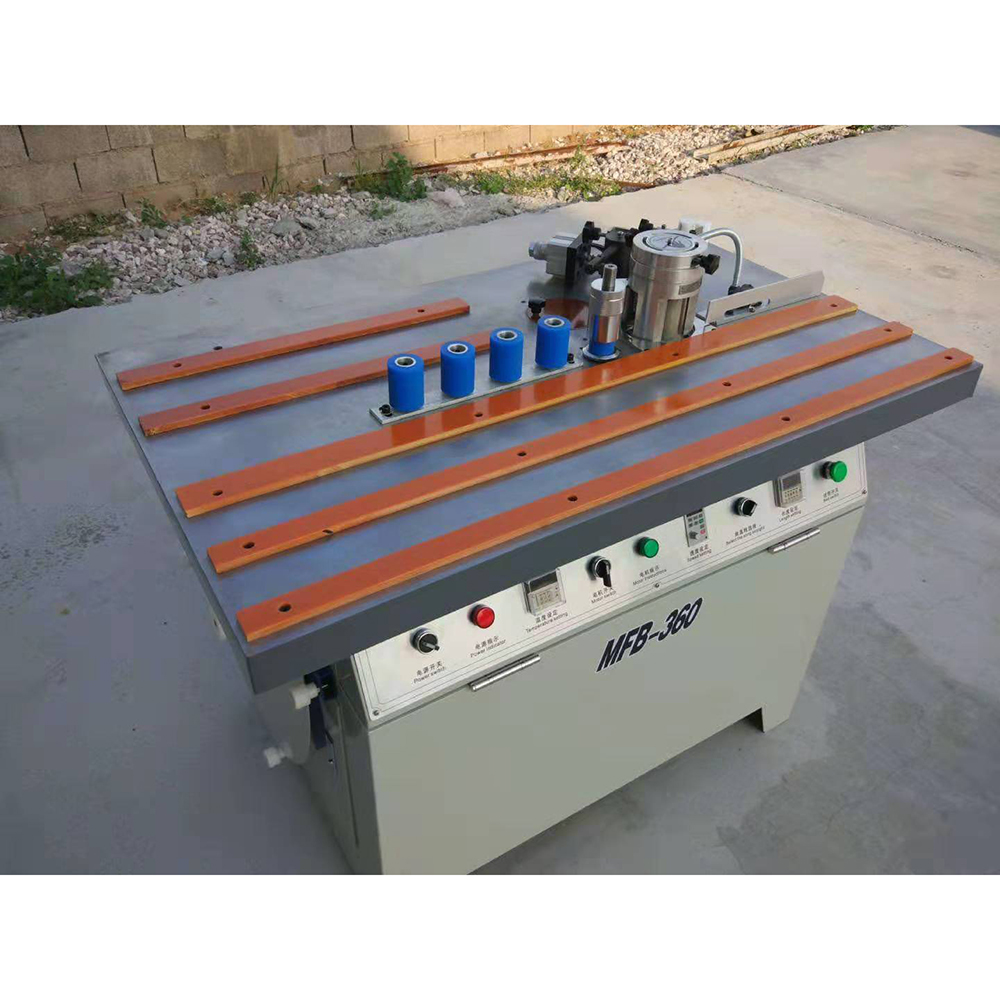
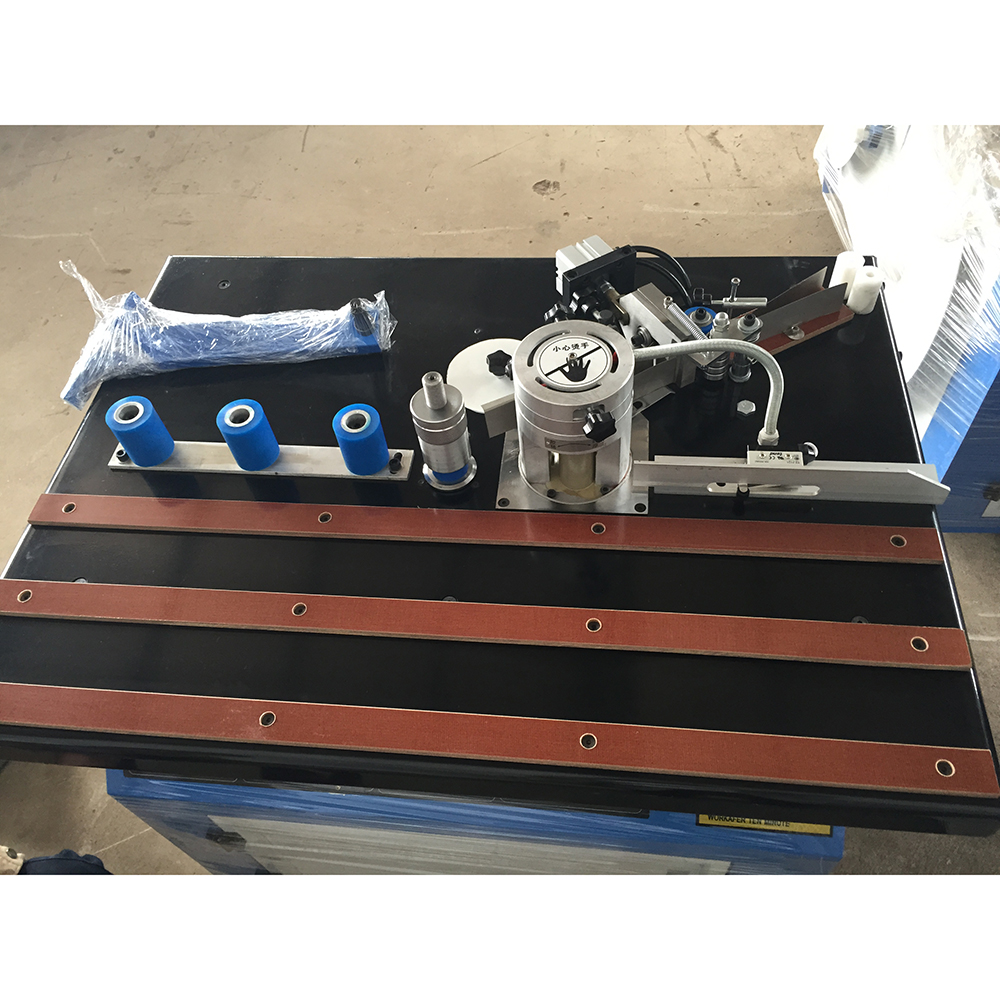
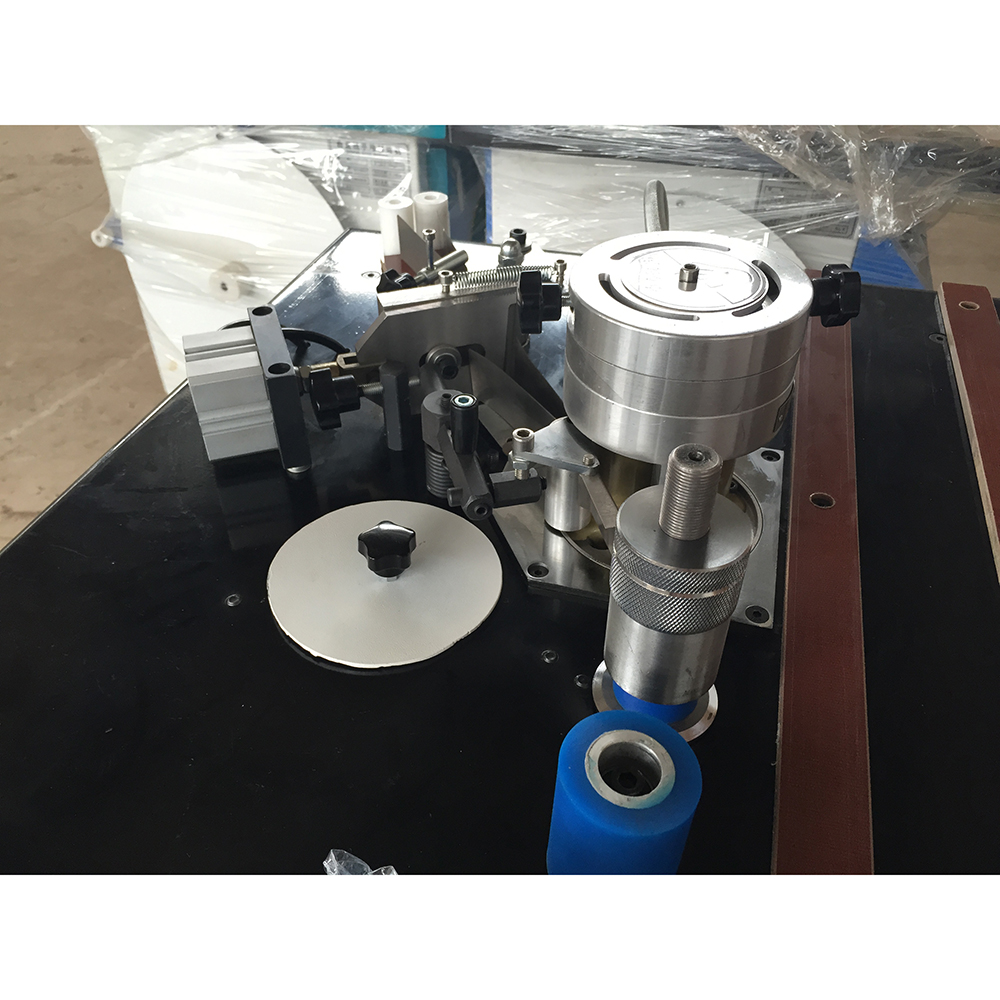
Curve&Straight Edge Bander MFB360 Curve sanding machine
The curved and straight line edge banding machine is a woodworking machine that combines the functions of curved and straight line edge banding, and is mainly used for edge banding treatment of boards in the furniture manufacturing industry.
Description
The sol does not age. There is a problem of repeated heating and aging of residual glue in the glue dispensing tank, which affects the bonding quality. In the glue dispensing tank, the sol seeps out from top to bottom without sedimentation or residue, making it easy to clean. Regular cleaning of the machine is more convenient for the upper glue tank than the lower one. It can even be cleaned without stopping the machine, which does not affect production.
| Model | MFB360 |
| Edge thickness | 0.15-3mm |
| Edge width | 10-50mm |
| Min curve working radius | 20mm |
| Feeding speed | 1-14m/min |
| Feeding Power | 0.37Kw |
| Heating power | 1.6Kw |
| Volume of Glue tank | 1.7L |
| The highest heating temperature | 220 ° C |
| Working air pressure | 0.55mpa |
| Overall dimensions | 1200*725*1505mm |
| Speed control | Frequency control |
| Weight | 180Kg |
| Voltage | 380V 50Hz |
The MFB360 is typically used in applications such as:
Woodworking: For sanding the edges of wooden panels, cabinet doors, and furniture parts.
Plastic & Metal Industries: It can also be applied to sanding curved and straight edges of plastic and metal components.
Automotive: For finishing edges of parts and panels in the automotive industry.
Furniture Manufacturing: Specifically for furniture pieces with intricate curved or straight edges.
The machine is versatile, often found in mass production environments where consistent, high-quality sanding of edges is crucial.
Maintaining a curve sanding machine is crucial for ensuring its longevity, efficiency, and optimal performance. Here are five common questions and answers regarding the maintenance of this essential equipment.
1. What daily maintenance tasks should be performed on a curve sanding machine?
Answer: Daily maintenance tasks include cleaning the machine to remove dust and debris, checking the sanding belts for any signs of wear or damage, and ensuring that all moving parts are free from obstructions. Additionally, it’s important to lubricate any necessary components as per the manufacturer’s guidelines.
2. How often should the sanding belts be replaced?
Answer: Sanding belts should be inspected regularly and replaced as needed, typically every few weeks depending on usage. If you notice reduced sanding efficiency, unusual noises, or visible wear, it’s time to replace the belts. Regular replacement will help maintain the quality of your sanding work.
3. What should I do if the machine is making unusual noises?
Answer: If the curve sanding machine is making unusual noises, first turn off the machine and unplug it. Check for any loose parts, debris caught in the mechanism, or worn bearings. If the issue persists after these checks, consult the manufacturer’s manual or contact a professional technician for further diagnosis and repair.
4. How can I ensure the machine is properly calibrated?
Answer: To ensure proper calibration, regularly check the alignment of the sanding belt and the workpiece support. Adjust the tension and tracking of the belt according to the manufacturer’s specifications. It’s advisable to perform calibration checks weekly or before starting a new project to maintain accuracy.
5. What long-term maintenance practices should I consider?
Answer: Long-term maintenance practices include conducting a thorough inspection of electrical components, replacing worn-out parts, and ensuring that all mechanical systems are functioning smoothly. Keeping an updated maintenance log can help track service dates and any issues that arise over time, allowing for proactive maintenance strategies.
By following these maintenance tips, you can enhance the performance and lifespan of your curve sanding machine, ensuring that it remains a valuable asset in your workshop.