
Wide Belt Sanding Machine FAQ: A Quick Guide for Woodworking Professionals
Wide belt sanding machine suitable for calibrating and fine sanding laminate lumber, composite board, particle board, solid wood, panel furniture, bamboo floor, wood door and etc. It is one of the necessary equipment for integrated wood and furniture manufacturing.
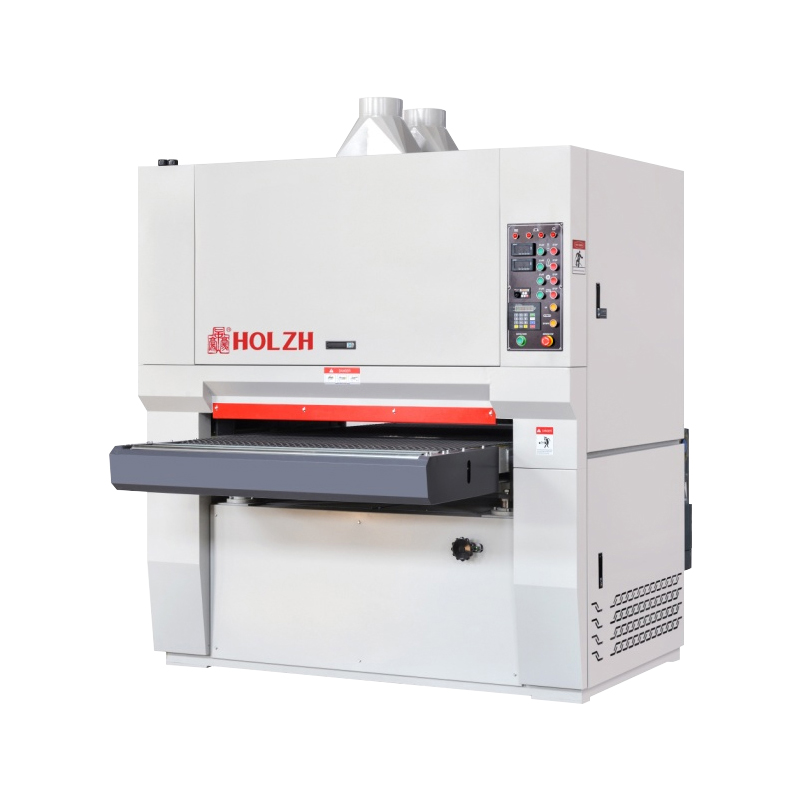
Q1: What is a wide belt sanding machine, and what is its primary purpose?
A: A wide belt sanding machine is a fundamental piece of equipment in modern woodworking and furniture manufacturing. Its primary purpose is to calibrate (level) and finish sand large, flat workpieces efficiently and consistently. As highlighted on the HOLZH product page, it is used for processing materials like laminate lumber, composite board, particle board, solid wood, panel furniture, bamboo flooring, and wood doors. It excels at removing material to achieve a uniform thickness and then creating a smooth, fine surface ready for finishing, making it essential for high-volume, precision production.
Q2: What types of materials can be processed with a wide belt sander?
A: These machines are highly versatile and designed to handle a wide array of sheet and solid materials. According to the manufacturer, the HOLZH BSG130R-RP model is suitable for:
Engineered Wood Products: Laminate lumber, composite board, and particle board.
Solid Wood: For both rough sizing and fine finishing.
Finished Products & Components: Panel furniture, bamboo floors, and wood doors.
This versatility makes it a central machine in integrated manufacturing plants that work with diverse material types.
Q3: What are some key features of an industrial wide belt sander like the HOLZH BSG130R-RP model?
A: The listed model incorporates several important features for effective and safe operation:
Dual Sanding Units: It features two separate sanding heads. The first unit (with a steel roller) is more powerful and is typically used for aggressive calibration and sanding. The second unit (with a rubber roller) is for finer polishing, providing a superior final surface.
Safety Mechanism: It includes a pressing roller protection device that holds the board firmly on the feeding table, enhancing operator safety by preventing kickbacks.
Integrated Dust Collection: The specifications include a high-volume dust collection requirement (9000m³/h), which is crucial for maintaining a clean work environment, ensuring good sanding results, and protecting machine components.
Q4: What are the important technical specifications to consider when evaluating a wide belt sander?
A: Key specifications, as shown in the product table, determine a machine’s capability:
Working Dimensions: Max working width (1300mm) and working thickness range (2.5-120mm) define the size of material it can handle.
Power & Speed: Total power (63.62Kw), belt speeds, and feed speed (6-30m/min) indicate its efficiency and capacity for different sanding tasks.
Machine Requirements: Voltage (380V, 50Hz) and working air pressure (0.5-0.8Mpa) are critical for proper installation and operation.
Physical Footprint: The overall dimension and weight (3800Kg) are important for factory floor planning and transportation.
Q5: What are some critical factors for operating a wide belt sander effectively and safely?
A: Beyond the machine’s features, successful operation depends on several factors:
Proper Abrasive Belt Selection: Using the correct grit sequence and belt type (for the steel or rubber roller) is vital for achieving the desired surface finish and belt life.
Adequate Dust Extraction: Connecting the machine to a dust collection system that meets or exceeds the specified 9000m³/h volume is non-negotiable for performance, finish quality, and shop air quality.
Correct Calibration and Maintenance: Regular checking of the feed belt, roller heights, and sanding platens ensures consistent thickness and finish. The abrasive belt tracking and tension must be properly adjusted.
Operator Training & Safety: Operators must be trained on safe feeding techniques, understanding the safety devices (like the pressing roller guard), and recognizing potential hazards like snipe (uneven ends) or burn marks from improper feed speed.